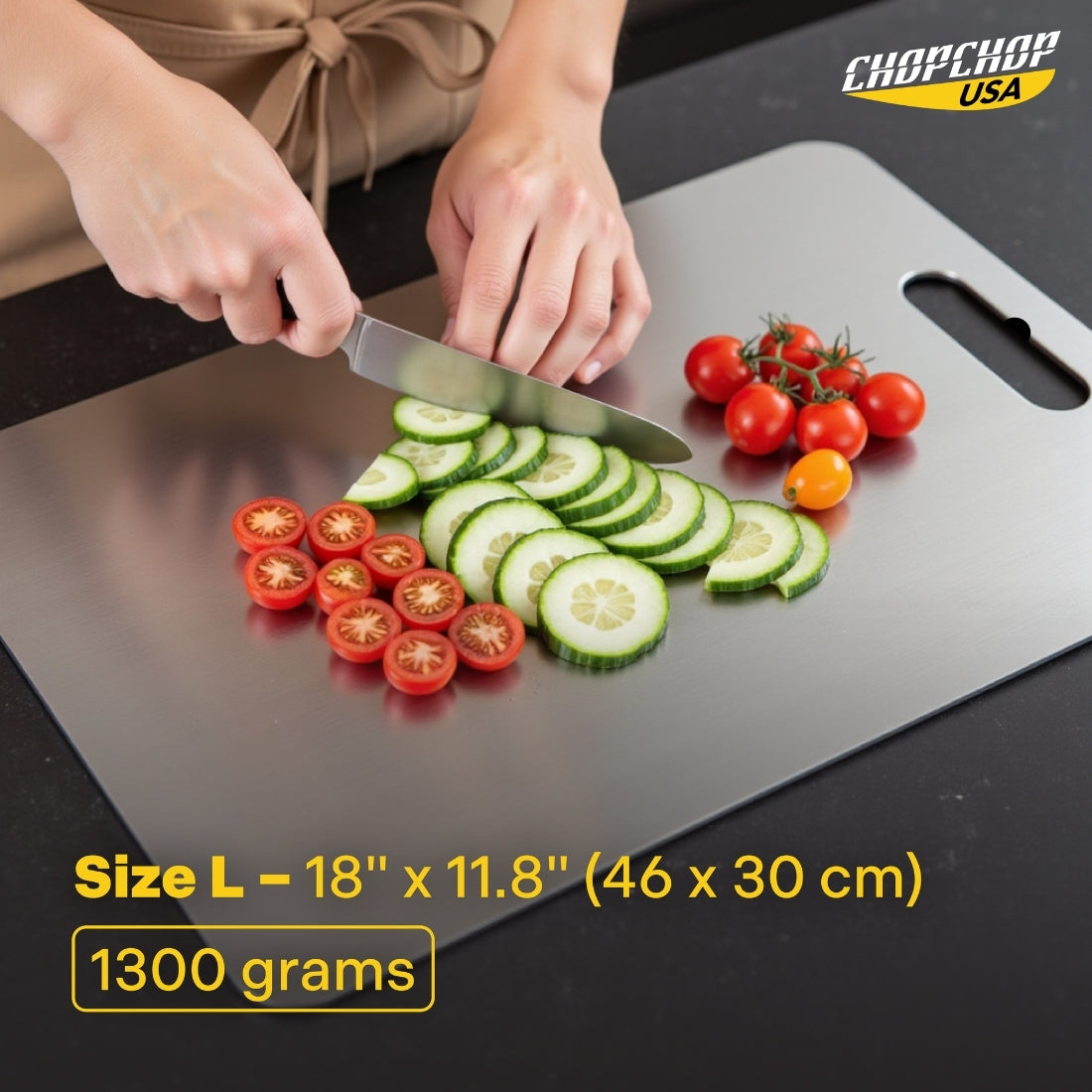
Are titanium cutting boards bad for knives? They can be harder on knife edges than traditional materials like wood or plastic. That does not mean they are automatically a bad choice, but it does mean buyers should understand the trade-off. Titanium cutting boards are known for durability, hygiene, and a sleek modern look, while premium options that are Made in USA and ship from the US with fast shipping may offer more confidence in both quality and delivery. This guide explains how titanium affects knife sharpness, what makes a board more knife friendly, and how to use and maintain a titanium board more effectively.
Key Takeaways
- Titanium cutting boards are valued for durability, hygiene, heat resistance, and modern design.
- Because titanium is harder than wood or plastic, it can cause knives to dull faster with regular use.
- Repeated use may also increase the risk of micro-chipping, especially with high-carbon steel knives.
- Titanium is still more practical than extremely hard surfaces like glass, but it is generally less forgiving on blades than softer cutting board materials.
- Proper care, lighter cutting technique, and regular honing can help reduce wear on your knives.
- Premium titanium cutting boards that are Made in USA, ship from US, and offer fast shipping can give buyers added confidence in quality and convenience.
Properties of Titanium Cutting Boards
Titanium cutting boards are favored for their unique combination of strength, hygiene, and aesthetic appeal. Below are some key properties that set them apart from other materials:
Extreme Durability

Titanium is one of the strongest metals available, making it highly resistant to warping and breaking. Unlike wood and plastic boards that can wear down over time, a titanium board maintains its structure for years with minimal maintenance. But are titanium cutting boards bad for knives? Due to their hardness, they can cause knife edges to dull faster than softer materials.
Heat and Stain Resistance
Titanium boards can withstand high temperatures without warping, making them ideal for hot pots, pans, and freshly cooked meats. Additionally, their non-stick surface prevents food particles and liquids from leaving lasting stains, keeping them looking pristine.
Knife Compatibility
While titanium is durable, it is also significantly harder than wood or plastic, which can affect knife sharpness. Frequent use on a titanium surface may cause knives to lose their edge faster compared to softer materials. This raises the question again: Are titanium cutting boards bad for knives? If knife longevity is a priority, softer materials like wood or plastic may be a better choice.
Non-Porous and Hygienic

One of the biggest advantages of titanium cutting boards is their resistance to bacteria and stains. Unlike wood, which absorbs moisture and can harbor bacteria, titanium is completely non-porous. This feature makes it a safe and sanitary option, especially when preparing raw meats and seafood. However, some still wonder, "Are titanium cutting boards bad for knives?" since the surface may be too hard for delicate blades.
Aesthetic and Modern Design
Titanium cutting boards often feature sleek, minimalist designs that complement modern kitchens. Their metallic finish gives them a high-end look while being incredibly easy to clean.
While titanium cutting boards offer numerous benefits, their interaction with knives is a crucial factor to consider before purchasing one. Are titanium cutting boards bad for knives? It depends on how often they are used and the type of knife being used.
How Cutting Boards Affect Knives

The surface of a cutting board plays a critical role in knife longevity and performance. The hardness, texture, and material of the board can influence how quickly a knife dulls.
Surface Hardness and Knife Edge Retention
Knives stay sharp longer when used on softer surfaces like wood or plastic because these materials have a slight give. Hard surfaces, such as titanium and glass, cause more friction against the blade, leading to faster dulling. Are titanium cutting boards bad for knives? Their hardness makes them less forgiving, meaning knives may require more frequent sharpening.
Friction and Blade Wear
Titanium, being harder than traditional cutting board materials, creates more resistance when slicing through food. This increased resistance gradually wears down the knife’s edge, requiring more frequent honing and sharpening.
Impact on Knife Longevity
Repeated cutting on a hard surface may not only dull the knife but can also cause micro-chipping, especially in high-carbon steel knives. This means professional chefs and serious home cooks may need to sharpen their knives more frequently when using a titanium board.
So, are titanium cutting boards bad for knives? The answer depends on how often you sharpen your knives and whether you prioritize durability over knife longevity. While titanium boards excel in hygiene and resilience, they require proper knife maintenance to minimize wear.
What Makes a Cutting Board Knife Friendly
A knife-friendly cutting board is not just about looking premium. It should help reduce unnecessary wear on the knife edge while still offering durability and practicality.

In general, a knife-friendly cutting board should have:
- a surface that is not excessively hard on the blade
- a clean, stable construction that supports everyday food prep
- enough durability to hold up over time without becoming rough or damaged
This is where genuine titanium becomes interesting. According to the original source article, titanium has a slightly softer surface than stainless steel, which helps protect knife edges better and keep them sharper longer.
Titanium vs. Other Cutting Board Materials
To understand how titanium compares, let’s analyze it against other common cutting board materials:
Titanium vs. Wood

- Pros of Wood: Gentle on knives, naturally antibacterial.
- Cons of Wood: Requires regular maintenance, can absorb odors and stains.
- Titanium's Edge: More durable and hygienic but less knife-friendly.
See more: Titanium vs Wooden Cutting Board – Which Is Better?
Titanium vs. Plastic

- Pros of Plastic: Lightweight, easy to clean, gentle on knives.
- Cons of Plastic: Prone to deep grooves, less durable.
- Titanium's Edge: More durable and hygienic but can dull knives faster.
See more: Are Your Plastic Kitchen Utensils Toxic? New Study Reveals Hidden Risks
Titanium vs. Bamboo

- Pros of Bamboo: Eco-friendly, resistant to bacteria.
- Cons of Bamboo: Harder than wood, can dull knives over time.
- Titanium's Edge: More durable but less forgiving on blades.
See more: Is a Bamboo Cutting Board Safe? Everything You Need to Know
Titanium vs. Glass

- Pros of Glass: Easy to clean, stylish.
- Cons of Glass: Extremely hard, quickly dulls knives.
- Titanium's Edge: Similar durability but more practical than glass.
Are Titanium Cutting Boards Bad for Knives?

Titanium cutting boards have become increasingly popular due to their durability, hygiene, and sleek design. However, one of the biggest concerns among professional chefs and home cooks alike is: Are titanium cutting boards bad for knives? While titanium is not as harmful to blades as glass, it is significantly harder than traditional cutting board materials like wood or plastic, which can have a direct impact on knife sharpness and longevity.
1. Knife Dulling
One of the primary issues with titanium cutting boards is that they accelerate knife dulling. Are titanium cutting boards bad for knives? Yes, in the sense that when a blade repeatedly makes contact with a hard, non-yielding surface like titanium, the sharp edge gradually wears down.
Unlike wood or plastic, which have slight "give" that cushions the knife, titanium is rigid and does not absorb any of the blade's impact. As a result, knives used on titanium boards will lose their sharpness more quickly, requiring more frequent honing and sharpening.
2. Micro-Chipping Risk
Another potential downside of titanium cutting boards is the risk of micro-chipping, particularly for high-carbon steel knives. Are titanium cutting boards bad for knives? If you own high-carbon blades, which are sharper but more brittle, the answer could be yes. When used on a hard surface like titanium, there is a chance that the fine edge may develop tiny chips over time.
When used on a hard surface like titanium, there is a chance that the fine edge of a high-carbon knife may develop tiny chips over time. This is especially true if a user applies excessive force while chopping or uses the board for heavy-duty tasks like cutting through bones or frozen foods.
3. Increased Sharpening Needs
Since titanium boards dull knives faster, users will need to sharpen their blades more often. Are titanium cutting boards bad for knives? They can be if you don’t want to frequently maintain your knife edges. Regular honing with a honing rod can help maintain the edge between sharpenings, but more frequent sharpening sessions with a whetstone or electric sharpener will be necessary to restore the knife's optimal performance.
Over time, excessive sharpening can shorten the lifespan of a knife, as each session removes a small layer of metal from the blade.
4. Impact on Knife Longevity
The long-term effects of using a titanium cutting board depend on the type of knives being used and the cutting techniques employed. Are titanium cutting boards bad for knives? If you're using softer stainless steel knives or only occasionally using a titanium board, the impact may not be significant.
However, professional chefs or culinary enthusiasts who invest in high-end, razor-sharp knives should be mindful of how often they use a titanium board. If maintaining an ultra-sharp edge is a top priority, they may want to reserve the titanium board for tasks that require durability and hygiene, while using a wooden or plastic board for regular chopping.
Do Titanium Cutting Boards Dull Knives?
A real titanium cutting board can still contribute to edge wear over time, because all cutting boards do to some degree. But genuine titanium should not dull knives as aggressively as stainless steel boards.

The source article makes this point clearly: titanium’s slightly softer surface helps preserve blade sharpness better, while fake titanium boards made from stainless steel can dull knives much faster.
If your board is:
- lightweight
- non-magnetic
- honestly labeled as 100% titanium
- from a trusted brand
then it is much more likely to be the kind of board that supports longer-lasting knife sharpness.
Best Practices for Using a Titanium Cutting Board
- Use High-Quality Knives: Stronger blades made from high-carbon or stainless steel last longer.
- Sharpen Knives Regularly: Frequent honing minimizes excessive wear.
- Avoid Heavy Chopping Motions: Reduce blade impact by using smooth slicing motions.
- Use a Secondary Board for Soft Ingredients: Consider a wood or plastic board for delicate cutting tasks.
- Clean the Board Properly: Wash with mild soap and dry immediately to maintain surface integrity.
Who Should Use a Titanium Cutting Board?
Titanium cutting boards are best suited for:
- Home cooks who prioritize hygiene and durability.
- Professional chefs who use high-quality knives and sharpen them regularly.
- Anyone looking for a long-lasting, modern cutting surface.
Introducing ChopChop USA Titanium Cutting Board
For those looking to experience the benefits of a titanium cutting board while minimizing its impact on knives, ChopChop USA Titanium Cutting Board is an excellent choice. Engineered with premium-grade titanium, this cutting board offers superior durability, stain resistance, and hygiene. Unlike traditional titanium boards, ChopChop USA has designed its surface with a specialized non-slip texture that reduces direct blade contact, helping to extend knife sharpness.
Key Features of ChopChop USA Titanium Cutting Board:

- 100% Premium Titanium: Built to last a lifetime, resistant to warping and bacteria buildup.
- Knife-Friendly Surface: Unlike standard titanium boards, it features a micro-textured finish that reduces friction and preserves blade edges.
- Ultra-Hygienic & Non-Porous: Prevents bacterial growth, making it perfect for raw meat, seafood, and fresh vegetables.
- Heat & Stain Resistant: Can withstand extreme temperatures without warping or discoloration.
- Non-Slip Base: Ensures stability while cutting, minimizing accidents in the kitchen.
Disadvantages of Titanium Cutting Boards
Titanium cutting boards are not perfect for everyone, and it is important to present a balanced view.

Higher Price
Real titanium is a premium material, so these cutting boards usually cost much more than plastic, bamboo, or fake “titanium” alternatives. The original article notes that genuine titanium boards are far more expensive than suspicious low-priced listings.
Market Confusion and Fake Listings
One of the biggest disadvantages is that the market is flooded with products mislabeled as titanium. Many are actually stainless steel, which means buyers may accidentally purchase something heavier, harsher on knives, and lower in value than expected.
Not as Soft as Traditional Knife-Favorite Surfaces
Even though titanium is friendlier than stainless steel, some users may still prefer the softer feel of wood for certain cutting tasks. Titanium is a premium metal surface, not a soft board.
While titanium cutting boards do come with a few drawbacks—especially when it comes to knife wear—not all products on the market are made to the same standard. That is why choosing a trusted brand matters. With ChopChop USA Titanium Cutting Board, customers get a premium product that is Made in USA, built with reliable quality, and ships fast from the US, giving buyers more confidence in both performance and fulfillment. For those who want the benefits of titanium from a brand they can trust, ChopChop USA offers a more dependable choice.
Conclusion
Are titanium cutting boards bad for knives? The answer depends on your priorities in the kitchen. Titanium cutting boards offer excellent durability, hygiene, and modern aesthetics, making them a great choice for those who prioritize cleanliness and longevity. However, their hardness can lead to faster knife dulling, requiring frequent sharpening.
If you’re looking for a cutting board that lasts a lifetime and don’t mind maintaining your knives, a titanium option like the ChopChop USA Titanium Cutting Board is a solid investment. For those who prioritize knife preservation, wood or plastic may be a better choice. Ultimately, the best cutting board depends on your cooking style, maintenance preference, and kitchen needs.
For more amazing recipes, follow me on Facebook and Instagram! If you have any questions about ChopChop USA's products or promotions, please feel free to contact us at support@chopchopusa.com. Our dedicated team is available 24/7 and always happy to assist you.
Frequently Asked Questions
Are titanium cutting boards safe for my knives?
They are generally safe to use, but they are not the most knife-friendly option compared with wood or plastic. Because titanium is harder, frequent use may dull blades faster and require more maintenance.
Is titanium a good material for cutting boards?
Yes, titanium is a strong material for cutting boards if you value durability, hygiene, heat resistance, and a modern look. The main trade-off is that it can be harder on knife edges than softer materials.
How to prevent knives from dulling on titanium cutting boards?
Use smooth slicing motions instead of heavy chopping, hone and sharpen your knives regularly, keep the board clean, and use a wood or plastic board for delicate cutting tasks when needed.