Can you use metal on carbon steel pans without ruining them? Yes, when used properly, metal utensils are generally safe. In this guide, ChopChop USA will explain how to use them correctly while protecting your pan’s seasoning and performance for long-term cooking success.
What Are Carbon Steel Pans?

Carbon steel pans are a favorite among both professional chefs and home cooks thanks to their versatility and durability. Made from a blend of iron and carbon, these pans combine the strength of cast iron with a lighter weight and faster responsiveness to heat.
Unlike nonstick cookware with synthetic coatings, carbon steel develops a natural nonstick surface through seasoning. This seasoning is created by heating thin layers of oil, forming a protective patina that improves over time. As you continue cooking, the pan becomes smoother, darker, and more efficient.
Carbon steel pans are widely used for searing meats, stir-frying vegetables, frying eggs, and even baking. Their ability to withstand high heat makes them especially popular in professional kitchens. With proper care, they can last for decades and even improve with age.
Can You Use Metal on Carbon Steel Pans?

The question “can you use metal on carbon steel pans” comes up often, especially among new users. The answer is yes—but with some important considerations.
Carbon steel is a durable material that can handle contact with metal utensils. Unlike delicate nonstick coatings that can easily scratch, carbon steel relies on a seasoning layer rather than a fragile surface. This makes it more forgiving when using tools like spatulas, turners, or tongs.
However, while the metal itself is tough, the seasoning layer requires care. Aggressive scraping or cutting directly in the pan can wear down the seasoning over time. So while you can use metal utensils, technique matters.
In short, can you use metal on carbon steel pans safely? Absolutely—if you use the right tools and handle them properly.
Why Metal Utensils Work With Carbon Steel?

Can you use metal on carbon steel pans without causing damage? Yes, thanks to carbon steel’s hardness, heat performance, and protective seasoning layer. These features allow metal utensils to be used safely while maintaining durability, cooking efficiency, and proper surface care over time.
Material Hardness
Carbon steel is significantly harder and more resilient than many coated cookware surfaces, allowing it to withstand contact with metal utensils without structural damage. This durability answers why can you use metal on carbon steel pans.
Unlike soft coatings that scratch easily, carbon steel maintains its integrity even with regular utensil use. This makes it ideal for cooks who prefer sturdy, responsive tools for consistent cooking performance.
Seasoning Layer Protection
The seasoning layer gives carbon steel its natural nonstick properties, but aggressive use of metal utensils can gradually wear it down. So, can you use metal on carbon steel pans safely? Yes, with proper care.
Gentle scraping or flipping is perfectly fine, and many chefs use metal spatulas for better control. Avoid sharp edges and excessive force to preserve the seasoning layer and maintain long-term cooking performance.
Heat Distribution Benefits
Carbon steel heats quickly and distributes heat evenly, making it ideal for high-performance cooking. Metal utensils can handle these temperatures, reinforcing why can you use metal on carbon steel pans effectively in daily cooking.
This combination allows precise techniques like flipping delicate foods or scraping browned bits for sauces. It improves control, efficiency, and overall cooking results, especially in fast-paced kitchens or professional cooking environments.
Will Metal Utensils Damage Carbon Steel Pans?

Metal utensils won’t damage the carbon steel itself, but they can affect the seasoning layer over time. This is where most concerns come from.
If you use excessive force, scrape aggressively, or use sharp-edged tools, you may notice patches where the seasoning becomes thinner. This doesn’t ruin the pan—it simply means you may need to re-season it.
In fact, occasional wear is normal and part of the lifecycle of carbon steel cookware. Many chefs intentionally use metal utensils because they help smooth the surface over time.
So, can you use metal on carbon steel pans without worry? Yes—but expect some maintenance as part of the process.
Best Practices for Using Metal Utensils

Choose Quality Tools
Using high-quality utensils ensures better control, durability, and safety. They reduce damage to your pan’s surface and help maintain seasoning while improving overall cooking performance.
Upgrade your cooking with the ChopChop USA Pure Titanium Utensils Set. Made from pure titanium, these tools are lightweight, durable, and safe for everyday use.
Includes: Skimmer, Spatula, Turner, and Dipper—designed for versatile cooking tasks.
Key Features: Lightweight yet strong construction ensures durability; non-reactive, antibacterial material keeps food safe; heat and corrosion resistance supports high-temperature cooking; ergonomic design provides comfortable grip and easy control during use.
High-quality utensils ensure smoother contact with your pan and help protect the seasoning.

ChopChop USA 100% Pure Titanium Utensils
Limited-Time Offer — Get Free Gifts
Avoid Excessive Force
Even though carbon steel is tough, avoid pressing too hard or scraping aggressively. Let the heat and proper cooking technique do the work instead of forcing food off the surface.
Monitor Your Technique
Angle your utensils gently and use smooth motions when flipping or stirring. Proper technique ensures you maintain the seasoning while still enjoying the benefits of metal tools.
Metal vs Silicone vs Wood Utensils

Each type of utensil has its pros and cons when used with carbon steel pans.
|
Utensil Type |
Pros |
Cons |
Best Use |
|
Metal |
Durable, heat-resistant, precise control |
Can wear seasoning if used aggressively |
High-heat cooking, searing, flipping |
|
Silicone |
Gentle on seasoning, flexible |
Less control, may feel soft |
Eggs, pancakes, delicate foods |
|
Wood |
Gentle, traditional, safe for seasoning |
Absorbs moisture and odors over time |
Stirring, low-heat cooking |
Each type has its strengths. Many cooks combine all three depending on the task. So, can you use metal on carbon steel pans effectively? Yes—especially for high-performance cooking.
How to Maintain Your Carbon Steel Pan?

Proper maintenance is key to keeping your carbon steel pan in top condition.
After cooking, wash the pan with warm water and minimal soap if needed. Dry it immediately to prevent rust. Apply a thin layer of oil to maintain the seasoning.
Avoid soaking the pan or leaving it wet. Store it in a dry place and re-season when necessary.
With consistent care, your pan will develop a strong, resilient surface that works perfectly with metal utensils.
Common Mistakes to Avoid

One common mistake is using too much force with metal utensils. Another is neglecting the seasoning after heavy use.
Some users also assume that scratches mean the pan is ruined—but this isn’t true. Carbon steel is designed to be restored easily.
Finally, avoid comparing it to nonstick pans. The rules are different, and understanding that difference helps you get the best results.
Why Choose The ChopChop USA Carbon Steel Pan?

ChopChop USA Carbon Steel Pan
Limited-Time Offer — Get Free Gifts
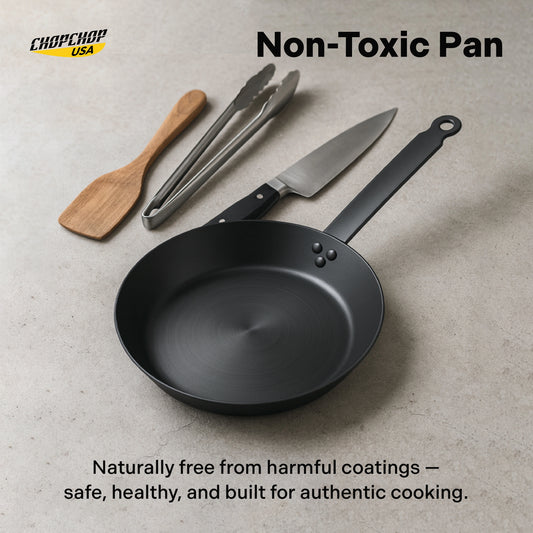
If you want cookware that performs like a professional kitchen tool while remaining easy to use at home, the ChopChop USA Carbon Steel Pan is a smart investment. Built from premium carbon steel, it delivers powerful heat control, long-lasting durability, and a naturally nonstick surface that improves over time.
Key Features
- Professional Cooking Performance – Precise heat control for searing, frying, sautéing, and stir-frying with restaurant-quality results.
- Fast and Even Heating – Heats quickly, distributes evenly, and responds instantly to temperature changes.
- Natural Non-Stick Surface – Builds a chemical-free seasoning layer that improves food release over time.
- Durable and Long-Lasting – Strong carbon steel construction designed for high heat and daily use.
- Lightweight Yet Strong – Easier to handle than cast iron while maintaining excellent performance.
- Versatile Cooking Use – Works on all stovetops and oven-safe for a wide range of recipes.
Upgrade your cooking experience with a pan that combines performance, durability, and simplicity—perfect for anyone ready to cook with confidence.
Conclusion
Can you use metal on carbon steel pans? Yes—with proper technique. ChopChop USA cookware and utensils help you cook confidently while maintaining durability, seasoning, and long-term performance.
For more amazing cooking content, follow us on Facebook and Instagram! If you have any questions about ChopChop USA products or promotions, contact us anytime at support@chopchopusa.com. Our 24/7 team is always happy to help.
Frequently Asked Questions
1. Can You Use Metal On A Carbon Steel Pan?
Yes, you can use metal on carbon steel pans safely. The material is durable, but you should avoid aggressive scraping to protect the seasoning layer.
2. Does Metal Scratch Carbon Steel?
Metal can affect the seasoning layer but not the steel itself. Light contact is fine, but excessive force may require re-seasoning to restore the surface.
3. Is It Better To Avoid Metal Completely?
No, it’s not necessary. Metal utensils are commonly used with carbon steel, but using proper technique ensures the seasoning remains intact longer.
4. How To Season Your Pan?
Clean, dry, and apply a thin oil layer. Heat until it smokes, then cool. Repeat several times to build a strong, natural nonstick seasoning layer.
5. How Often Should You Re-Season Your Pan?
Re-season when the surface looks dull or food starts sticking. Frequency depends on usage, but occasional maintenance keeps the pan performing at its best.