Do carbon steel pans leach iron when you cook everyday meals? Yes, carbon steel pans can transfer small amounts of iron into food, especially when cooking acidic ingredients like tomatoes, lemon, or wine. These amounts are typically minute and nutritionally beneficial rather than harmful. In this guide, ChopChop USA will explain the science, benefits, risks, and best ways to cook confidently.
What Is a Carbon Steel Pan?

A carbon steel pan is cookware made mostly from iron with a little carbon. This blend creates a strong pan that heats quickly and responds fast to heat changes. Many cooks value its durability, speed, and everyday versatility in busy kitchens.
Compared with cast iron, carbon steel is usually lighter and easier to handle. Compared with many nonstick pans, it tolerates higher heat and can last for years. It works well for searing steak, frying eggs, sautéing vegetables, pancakes, and stir frying meals.
Another key feature is seasoning. A thin layer of polymerized oil forms after proper heating. Over time, seasoning improves food release, supports better browning, and helps protect the metal from moisture. Many pans perform better with regular cooking and simple care over time.
Because the pan is made from iron, shoppers often ask: do carbon steel pans leach iron? Small amounts may transfer depending on ingredients, cooking time, and seasoning quality. Acidic foods increase reactivity, while a well-seasoned surface helps reduce direct metal contact overall.
Is Carbon Steel Non-Toxic?

Carbon steel is widely considered a safe and non toxic cookware material when used properly. It does not rely on synthetic nonstick coatings that can wear down over time. Instead, it uses seasoned oil on bare metal to create a naturally slick cooking surface.
That matters to people who want simple materials in the kitchen. A quality carbon steel pan contains no PFAS coating, no peeling layer, and no fragile surface that demands low heat only. You can use high heat for browning, roasting, or fast stovetop cooking.
Like any cookware, proper use matters. If a pan is left wet, it can rust. If burned food is not cleaned off, cooking performance drops. If seasoning becomes patchy, food may stick more. These issues are maintenance concerns, not evidence that the pan is toxic.
For households seeking durable cookware with fewer coatings, carbon steel is a strong option. Still, many buyers continue asking do carbon steel pans leach iron because they want to understand how metal contact affects food.
Do Carbon Steel Pans Leach Iron?

Yes, carbon steel pans can transfer iron into food because the cooking surface contains iron. During heat and moisture exposure, tiny amounts may move into ingredients. Usually, the amount is small and often lower once the pan develops a strong seasoning layer over time.
Several factors affect iron transfer. Acidic ingredients such as tomatoes, vinegar, citrus juice, or wine can increase reactivity. Longer simmering also raises food contact with metal. Thin sauces, soups, and braises may absorb more than a quick seared steak. This is why do carbon steel pans leach iron depends on what you cook.
Dry cooking usually causes less transfer. Searing vegetables, frying eggs, or cooking pancakes for a few minutes often results in minimal change. A mature seasoning layer also helps reduce direct food contact with bare iron during daily use.
So, do carbon steel pans leach iron enough to worry about? For most healthy users, no. Sensible cooking habits and proper seasoning keep transfer modest and safe.
What Foods Cause More Iron Leaching In Carbon Steel Pans?

Some foods are more likely to pull iron from cookware than others. If you ask do carbon steel pans leach iron, acidic foods are the main trigger. Tomatoes, lemon juice, tamarind, vinegar, and wine-based sauces can increase reactivity.
Moisture also matters. Liquid soups, sauces, and long-simmering dishes keep food in contact with the pan longer than dry cooking, which may increase transfer.
Marinades can have a similar effect. It is better to marinate food in glass or stainless steel, then cook quickly in the pan.
Better choices include eggs, potatoes, mushrooms, onions, chicken, steak, tofu, pancakes, and many vegetables. These foods work well for quick cooking and reduce concerns about do carbon steel pans leach iron.
If you often cook acidic dishes for long periods, stainless steel may be better. For everyday frying and searing, carbon steel remains an excellent choice.
Does Seasoning Reduce Iron Leaching?

Yes, seasoning can reduce iron transfer. When oil is heated correctly, it bonds into a thin protective layer across the metal. This layer acts as a barrier between food and the pan, helping reduce direct contact during everyday cooking and repeated heating over time.
A newer pan may react more until seasoning builds. After regular cooking, the surface often becomes darker, smoother, and less sticky. As seasoning improves, many users notice easier cleanup, better browning, and more reliable cooking performance with less sticking during meals.
Seasoning also helps prevent rust because it limits moisture exposure. That means maintenance and cooking results are closely connected. A well-cared-for pan usually lasts longer, performs better, and becomes easier to use with continued cooking and simple care over many years of use.
If food sticks more, dull gray metal appears, or rust spots form, clean and reseason the pan. Use thin oil layers, not thick coats. When people ask do carbon steel pans leach iron, seasoning remains a key answer.
How To Use Carbon Steel Safely?

Wash a new pan, dry it fully, and season it before first use. Start with medium heat until you learn how quickly the pan responds. Add oil after preheating, then cook as normal. Use enough oil for delicate foods, and let meat release naturally before flipping if you ask do carbon steel pans leach iron.
After cooking, clean with warm water and a soft brush or sponge. Avoid soaking the pan for long periods. Dry it immediately with heat or a towel, then apply a light film of oil before storing if desired. Store the pan in a dry place to prevent moisture damage and reduce concerns about do carbon steel pans leach iron.
Do not keep tomato sauce or leftovers in the pan overnight, as acidic foods can weaken seasoning and increase metal contact. Transfer food to another container after meals.
If rust appears, scrub it off, dry the pan, and reseason. Carbon steel is forgiving, and even older pans can often be restored with simple care. Keep seasoning layers thin, avoid sudden cold water on a hot pan, and do not worry about light scratches from normal cooking. Performance usually improves with regular use.
Carbon Steel Recommendations: ChopChop USA

ChopChop USA Carbon Steel Pan
Limited-Time Offer — Get Free Gifts
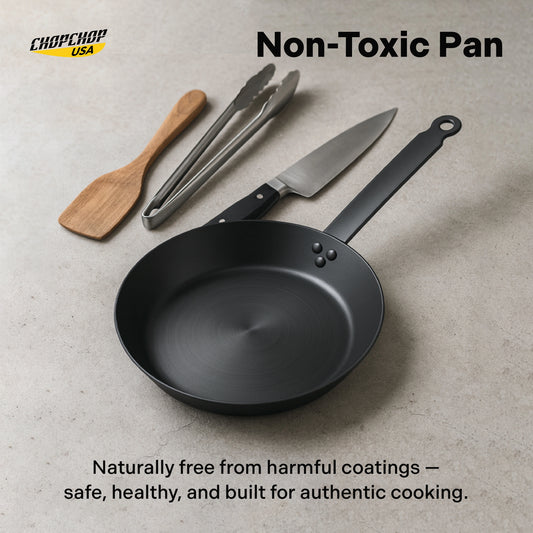
If you want cookware with professional performance and everyday convenience, the ChopChop USA Carbon Steel Pan is a smart choice for home cooks and chefs. Made from premium carbon steel, it offers durability, fast heat response, and a natural nonstick surface without chemical coatings.
The pan heats quickly, distributes heat evenly, and reacts fast to temperature changes, giving you better control for searing, frying, sautéing, and stir-frying. Over time, it develops a natural seasoning layer (patina) that improves food release, boosts performance, and reduces sticking.
Built for long-term use, it handles high heat and daily cooking with ease. Compared with cast iron, it delivers similar cooking benefits while being lighter and easier to handle. It is also highly versatile, working on gas, electric, induction cooktops, and in the oven.
Available Sizes
- 9.5 in (24 cm) – 700 g: Best for eggs, vegetables, and quick meals for one or two people.
- 10.2 in (26 cm) – 900 g: A practical everyday size for frying, searing, and general cooking.
- 11 in (28 cm) – 1200 g: Great for steaks, stir-fries, and larger family meals.
Why Choose ChopChop USA?
- Food-safe cookware with no chemical coatings
- Fast and even heating for better control
- Natural nonstick surface that improves over time
- Easy care with rinsing, drying, and light oiling
- Strong construction for long-term use
- Lighter than many traditional heavy pans
For anyone researching do carbon steel pans leach iron, this pan offers the key benefits of carbon steel with quality construction and reliable everyday performance.
Conclusion
Do carbon steel pans leach iron? Yes, but usually only small amounts. For most cooks, that is safe and manageable. Proper seasoning reduces reactivity and improves results. ChopChop USA Carbon Steel Pans deliver durable performance for everyday cooking.
For more amazing cooking content, follow us on Facebook and Instagram! If you have any questions about ChopChop USA products or promotions, contact us anytime at support@chopchopusa.com. Our 24/7 team is always happy to help.
FAQ
1. What Foods Should I Avoid In Carbon Steel?
Avoid long cooking of highly acidic foods like tomato sauce, lemon, or vinegar-based dishes, especially in a newly seasoned pan.
2. Can Carbon Steel Pans Rust?
Yes, carbon steel can rust if left wet. Dry the pan immediately after washing and apply a light oil layer if needed.
3. How Often Should I Season My Pan?
Season whenever food sticks more, rust appears, or the surface looks dry and patchy.
4. Is Carbon Steel Cookware Safe For Cooking?
Yes, carbon steel cookware is safe for cooking when used properly. It has no chemical coatings, handles high heat well, and improves with seasoning over time.
5. Why Do Chefs Like Carbon Steel?
Chefs value fast heating, strong searing, durability, and a naturally improving surface with regular use.