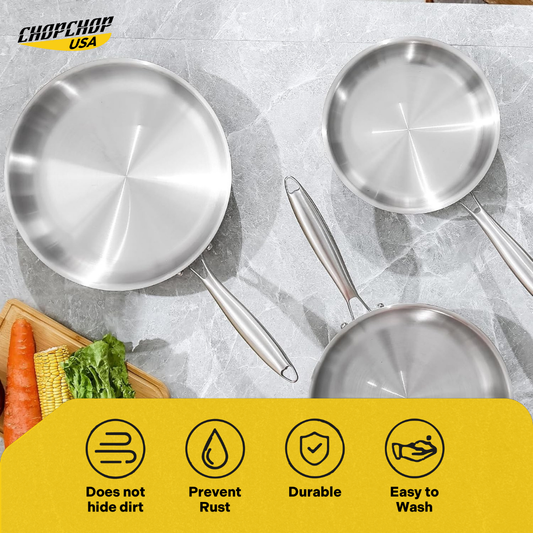
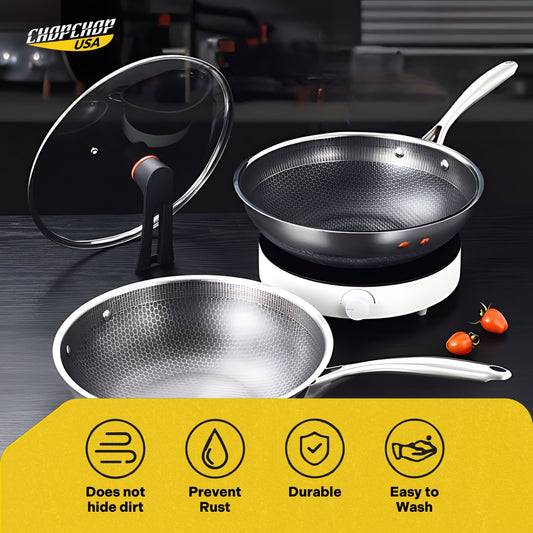
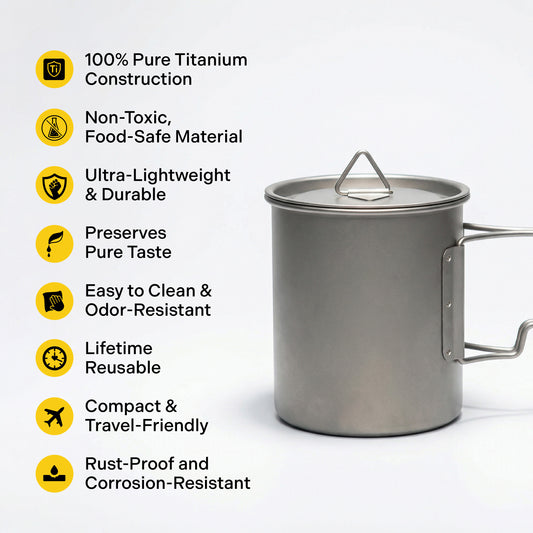
What are the titanium cookware pros and cons? They include excellent durability, strong safety benefits, and easy maintenance, balanced by higher upfront cost and performance considerations depending on cooking style and construction.
In this guide, ChopChop USA will explain titanium cookware pros and cons clearly, helping you understand materials, benefits, limitations, and comparisons so you can confidently choose cookware that fits your kitchen, lifestyle, and long-term cooking goals.
What is Titanium Cookware?

Titanium cookware refers to cookware that incorporates titanium as a cooking surface, reinforcement layer, or structural alloy. Unlike traditional nonstick cookware, many titanium options avoid chemical coatings, making them appealing to health-conscious consumers.
Pure titanium is naturally corrosion-resistant, lightweight, and non-reactive with food. These properties make it exceptionally safe for cooking and prevent chemical interactions that could affect flavor or food quality.
However, titanium alone does not conduct heat efficiently. To solve this, high-quality titanium cookware uses layered construction, combining titanium with aluminum or stainless steel to improve heat distribution and overall cooking performance.
Key Features of Titanium Cookware

Titanium cookware stands out for its strength, safety, and modern performance. Understanding its key features explains why it delivers long-lasting reliability, simple maintenance, and consistent cooking results across everyday kitchen tasks.
Durability
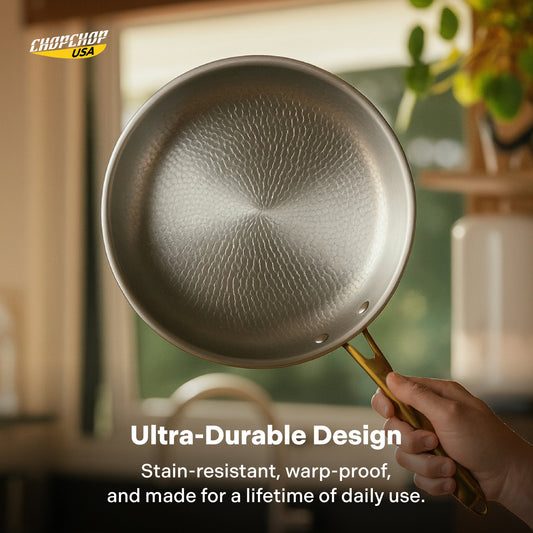
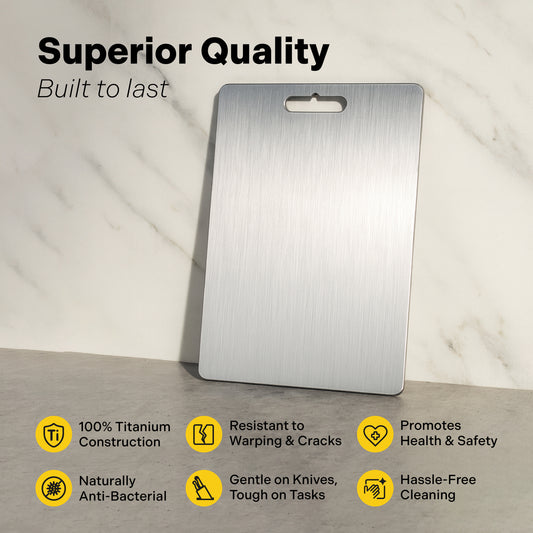
Durability is one of the most discussed aspects in titanium cookware pros and cons evaluations. Titanium resists rust, corrosion, warping, and scratching, even with frequent daily use. Unlike coated pans, the surface does not peel or degrade over time, making it ideal for long-term cooking.
Weight
Titanium cookware is significantly lighter than cast iron and many steel alternatives. This lightweight strength is a major advantage in titanium cookware pros and cons discussions, especially for home cooks who value easy lifting, flipping, and maneuvering without sacrificing performance.
Heat Conduction
On its own, titanium heats unevenly, which is often mentioned as a limitation in titanium cookware pros and cons. High-quality designs address this by incorporating aluminum cores or stainless steel layers, ensuring even heat distribution and reducing hot spots during cooking.
Non-Stick Performance
Titanium surfaces offer natural food-release properties without relying on chemical coatings. While not as slick as Teflon, this natural non-stick quality improves safety and durability—an important consideration when weighing titanium cookware pros and cons.
Easy to Clean
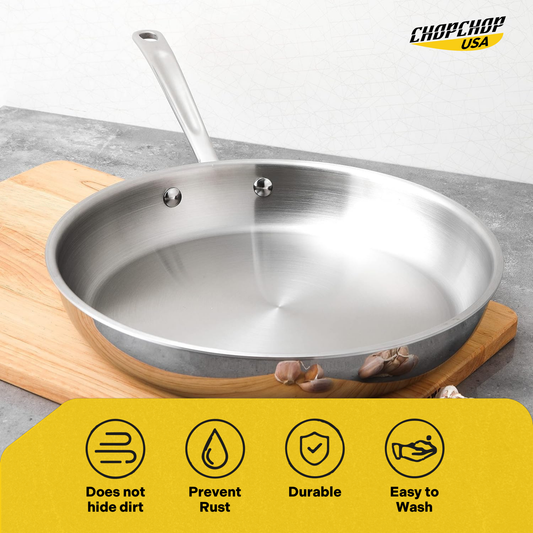
Smooth titanium surfaces resist staining and food buildup. Cleanup is quick and simple, which is why ease of cleaning consistently appears as a strong advantage in titanium cookware pros and cons comparisons.
Pros of Titanium Cookware

Titanium cookware offers strong safety, durability, and ease of use, making it a standout option in modern kitchens. When weighing titanium cookware pros and cons, these advantages appeal to cooks who value long-lasting performance, dependable construction, and cookware that requires minimal upkeep over time.
Non-Toxic and Food-Safe
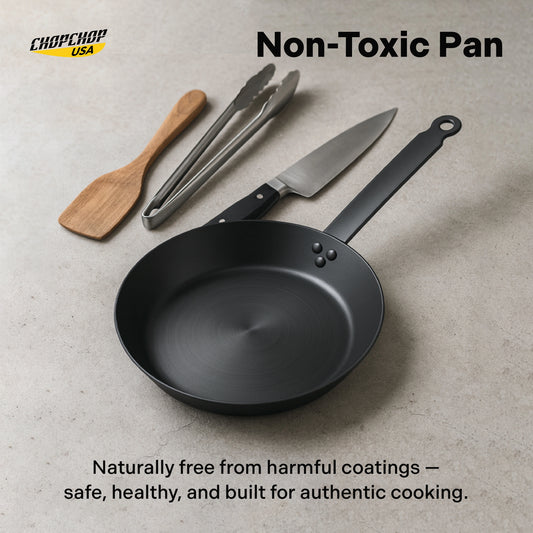
Titanium is naturally non-reactive, meaning no chemical leaching or coating breakdown occurs during cooking. This ensures safe food contact, preserves natural flavors, and protects nutritional quality, even when cooking acidic or high-heat dishes.
Highly Resistant to Corrosion and Rust
Titanium cookware maintains its appearance and performance even with frequent exposure to moisture and heat. Its corrosion resistance prevents rust, discoloration, and surface degradation, extending its usable lifespan significantly.
Scratch- and Dent-Resistant
Built to handle daily wear, titanium cookware resists scratches from metal utensils and dents caused by regular handling. This toughness helps the cookware retain both functionality and visual appeal over years of use.
Lightweight Yet Strong
Despite its strength, titanium cookware remains lightweight and easy to maneuver. This balance improves comfort and control during cooking, making lifting, stirring, and flipping effortless without sacrificing durability.
Performs Well at High Temperatures
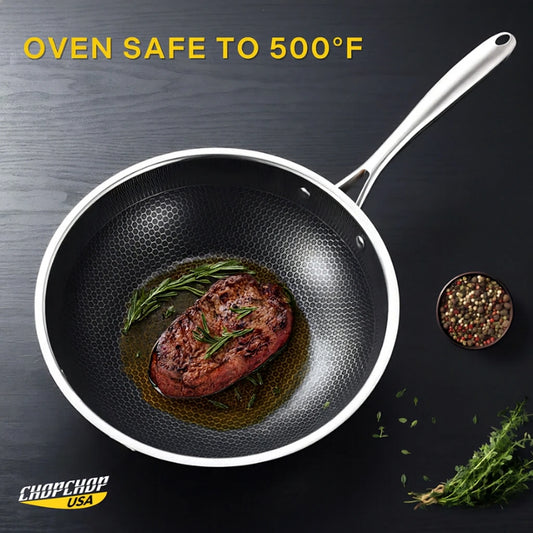
Titanium cookware tolerates high cooking temperatures without warping or breaking down. It supports searing, sautéing, and other demanding techniques while maintaining stable performance.
Together, these benefits position titanium cookware as a premium choice for kitchens focused on health, efficiency, and long-term value rather than short-term convenience.
Cons of Titanium Cookware

When evaluating titanium cookware pros and cons, budget is the primary consideration. Titanium cookware typically costs more upfront due to premium materials, advanced multi-layer construction, and its long service life. For many users, this cost is offset by durability and reduced replacement needs over time.
Best Uses for Titanium Cookware

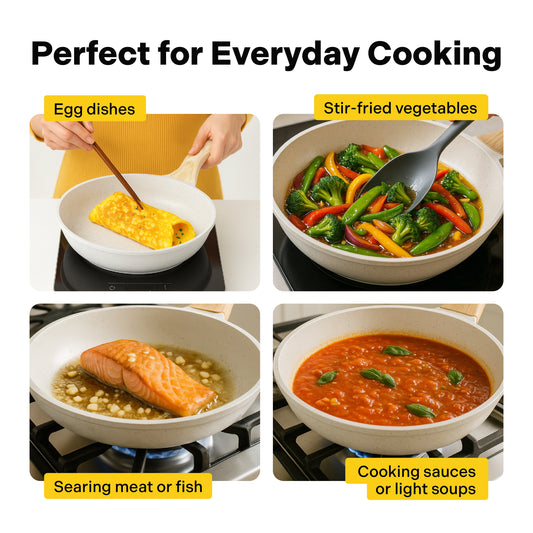
Titanium cookware is ideal for a wide range of everyday cooking tasks, including searing, sautéing, scrambling, frying, and simmering. Its durable, non-reactive surface handles repeated use without breaking down, making it dependable for both quick meals and longer cooking sessions.
With stable performance across low to high heat, titanium cookware also supports grilling-style techniques and regular daily cooking. Its balanced construction delivers consistent results while remaining easy to handle, clean, and maintain in busy home kitchens.
Best suited for:
- Health-conscious cooks avoiding chemical or synthetic nonstick coatings
- Everyday home cooking and frequent meal preparation
- Busy kitchens that require durable cookware for regular use
- Users seeking long-lasting, scratch-resistant cookware
- Low-maintenance kitchens that prefer quick, simple cleanup
- Home cooks replacing worn, damaged, or short-lived nonstick pans
- Titanium Cookware Compared to Other Materials
Titanium Cookware Compared to Other Materials

Comparing titanium cookware to other popular materials highlights its unique strengths and trade-offs. Understanding these differences helps you evaluate performance, safety, durability, and maintenance more clearly.
|
Feature |
Titanium Cookware |
Teflon Nonstick Pans |
Aluminum Pans |
Copper Pans |
|
Durability |
Very high, scratch- and corrosion-resistant |
Low to moderate, coating wears |
Moderate, dents easily |
Moderate, soft metal |
|
Non-Stick Performance |
Natural release, improves with oil |
Excellent, very slick |
Poor without coating |
Poor without lining |
|
Heat Conduction |
Even with layered construction |
Good |
Very good |
Excellent |
|
Safety / Non-Toxic |
Non-toxic, chemical-free |
Depends on coating condition |
May react with acids |
Requires lining |
|
Maintenance |
Low, easy to clean |
Moderate, careful use |
Moderate |
High, frequent polishing |
|
Weight |
Lightweight yet strong |
Lightweight |
Lightweight |
Heavy |
|
Longevity |
Long-lasting, years of use |
Short to moderate lifespan |
Moderate lifespan |
Long with high maintenance |
This comparison shows why titanium cookware pros and cons often favor durability, safety, and ease of care.
Compatible for Every Kitchen Setup

Titanium cookware is engineered to perform reliably across a wide range of kitchen environments. From compact apartments to busy family homes, its durable yet lightweight construction supports safe cooking, efficient heating, and consistent results during everyday meal preparation.
Designed for versatility, titanium cookware works well on common household stovetops, including gas, electric, and ceramic surfaces. When paired with layered construction, it promotes even heat distribution and stable temperature control, helping reduce hot spots and improve overall cooking performance.
Understanding stovetop compatibility also helps extend cookware lifespan. Titanium cookware with a stainless steel exterior is induction-ready, allowing flexibility as kitchens evolve. This adaptability makes titanium cookware a practical, long-term choice for modern kitchens using multiple cooking surfaces.
How to Care for Titanium Cookware

Proper care helps preserve titanium cookware’s durability, appearance, and cooking performance over time. While titanium is naturally strong and resistant to damage, following simple maintenance habits ensures consistent results and extends the lifespan of your cookware.
- Use low to medium heat to support even cooking and protect the surface
- Avoid abrasive cleaners, harsh chemicals, and metal scouring pads
- Handwash with mild detergent and warm water after use
- Allow cookware to cool before cleaning to prevent thermal stress
- Non-reactive surface resists staining, odors, and food buildup
These easy care steps keep titanium cookware performing reliably for everyday cooking.
ChopChop USA Titanium Pan Pro

ChopChop USA Titanium Pan Pro
Limited-Time Offer — Get Free Gifts
The ChopChop USA Titanium Pan Pro offers a safer, smarter solution for everyday cooking. Its tri-ply design—featuring a pure titanium interior, aluminum core, and stainless steel exterior—delivers natural safety, lasting durability, and even heat distribution without harmful coatings.
- Food-safe interior – Pure titanium cooking surface that is non-toxic and corrosion-resistant
- Even heat distribution – Advanced layered construction minimizes hot spots
- Scratch-resistant surface – Titanium hardness protects against daily wear
- Easy to clean – Smooth interior prevents sticking and buildup
- Built to last – Engineered for years of dependable use
- Lightweight yet durable – Easy to handle without sacrificing strength
Conclusion
Understanding titanium cookware pros and cons helps you invest wisely. ChopChop USA combines safety, durability, and performance, making titanium cookware a smart, long-term choice for modern kitchens.
For more amazing cooking content, follow us on Facebook and Instagram! If you have any questions about ChopChop USA products or promotions, contact us anytime at support@chopchopusa.com. Our 24/7 team is always happy to help.
Frequently Asked Questions
1. How Long Will The Titanium Pan Pro Last?
With proper care, the Titanium Pan Pro can last many years, as its durable titanium surface resists corrosion, scratches, warping, and daily wear.
2. What Are The Negatives Of Titanium?
The main negatives include higher upfront cost and reduced heat conductivity without layered construction, common factors when evaluating titanium cookware pros and cons.
3. Is Titanium Cookware Safe?
Yes, titanium cookware is food-safe and non-toxic, as it does not react with ingredients or release harmful chemicals during everyday cooking.
4. Is It Easy To Clean?
Titanium cookware is easy to clean because food releases smoothly, stains resist bonding, and most messes wash away with gentle cleaning.
5. Can I Cook Acidic Foods In It?
Yes, titanium is non-reactive, making it safe for acidic foods like tomatoes or citrus without altering flavor or damaging the surface.